When I went to the Schiedam Open Monumentendag Celebration, I went to the Windmill Museum which is inside one of the windmills, the Museummolen De Nieuwe Palmboom.

 In the lobby of the museum, they had a scale model of the windmill. There are eight levels in the mill but you could only go up to five.
On the way up to the museum levels, there is a sign which might be a little disconcerting.

The museum is set up like a working mill, with the museum set up around the relevant areas of the windmill.

This, for instance, shows the kinds of jobs that are related to the grain industry.
Boer--Farmer
Molenaar--Milliner
Bakker--Baker
Brander--Distiller

There was also a list of the "Language of the Mills" which describes the ways in which the position of the mill sails at rest could convey messages.
The first sign shows that the mill is taking a short break, such as for lunch. It is easier to restart the mill from this position.
The second sign shows that the mill is taking a longer break, as for over Sunday. It is harder to restart the mill from this position but it is also less likely to attract lightning strikes than the short-break position.
the third sign shows celebration, as in births or marriage. So this is how the Dutch would celebrate little Isaiah.
The fourth sign shows mourning.
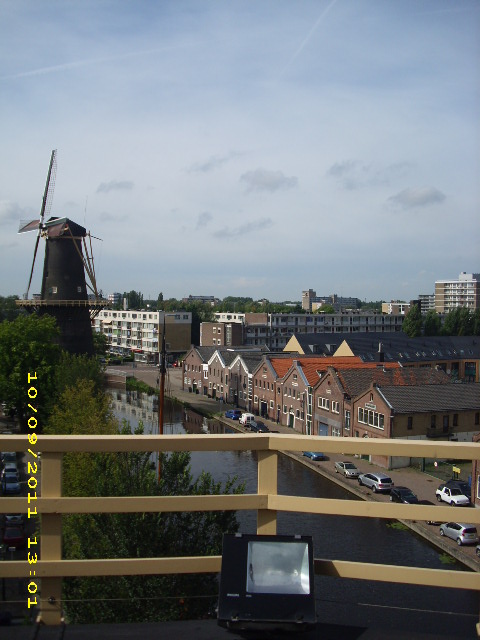
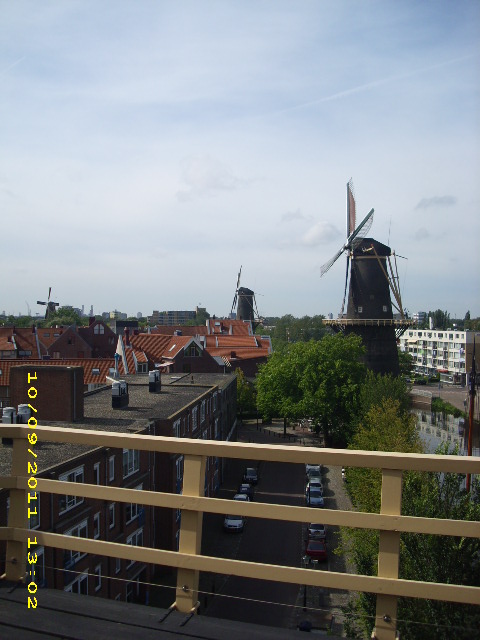
This shows a model of Schiedam circa 1600. Notice the number of windmills around the periphery of the city. Schiedam is known for having the tallest old style windmills in the Netherlands. They started off normal size but because there were so many of them they kept getting taller and taller. Only five of these windmills are still extant but the Schiedam Windmill Association has bought the land where two others were located and are planning on reconstructing them when they have the funds. If you look at the map below, the Metro stop is on the left side of the map, near that string of buildings that run away from the city along the canal and the Palmboom Mill is the second mill south of the road there (in this picture you are looking more or less south).

 This is the way that they used to keep track of all the grains ground and of the taxes due on each job--those taxes were taken in percentages of the ground flour.
 |
| This is a model of a different kind of mill. |

This is a much simpler kind of windmill made for the express purpose of watering the cattle. Much better than carrying buckets of water places.

This is the scale model of the windmill that shows the working parts of the mill. Notice the framework and the giant captain's wheel like thing that are used to adjust the orientation of the sails.

The windmill was turning when I was there. These are the cogs that connect the actions of the sails to the the working bits of the windmill.


The picture above was taken without flash and you can see the spin-y-ness. The one on the right is taken with flash so you can see what the cogs look like.
This is the grinding section where there are three massive sets of mill stones to grind flour.

 |
| This is the section below the millstones. The ground flour goes down those fabric tubes and is loaded . . . |
 |
| . . . into the these bags for purchase and transportation. |
 |
| This is the scale where bags of flour were weighed. |
 |
| The bags were then sent down through this trapdoor instead of being carried down the little bitty stairs that resembled ladders. |


This is the back door of the mill. The sign on the fellow's mill stone says "Please use other door."
 |
| I thought that this looked very Dutch. This also shows the size of a millstone, even if this is just half of one. You wouldn't want one of these tied around your neck. |

This is used for unloading grain into the mill. I am pretty sure that Grandpa had something that looked a lot like this on the farm somewhere.
The windmill was used primarily to grind grains for Jenever production.

This is one of the boats that was used for the transportation of Jenever related products around the city canals. It carried the leftover mash from making the Jenever which was used as cattle feed.
 |
| The Museum Windmill. |
 |
| The museum next door, which is being used as a restaurant. |
 |
| This is the name plate on one of the other windmills. |
 |
| An advertisement for a radio station painted onto a giant concrete flour bag shape next to a windmill. |
 |
| One of the other windmills in town. It is the only one which still has a live-in mill keeper. |
 |
| This is the English language section of the sign that is outside the Windmill Museum. |